🚀 Introduction
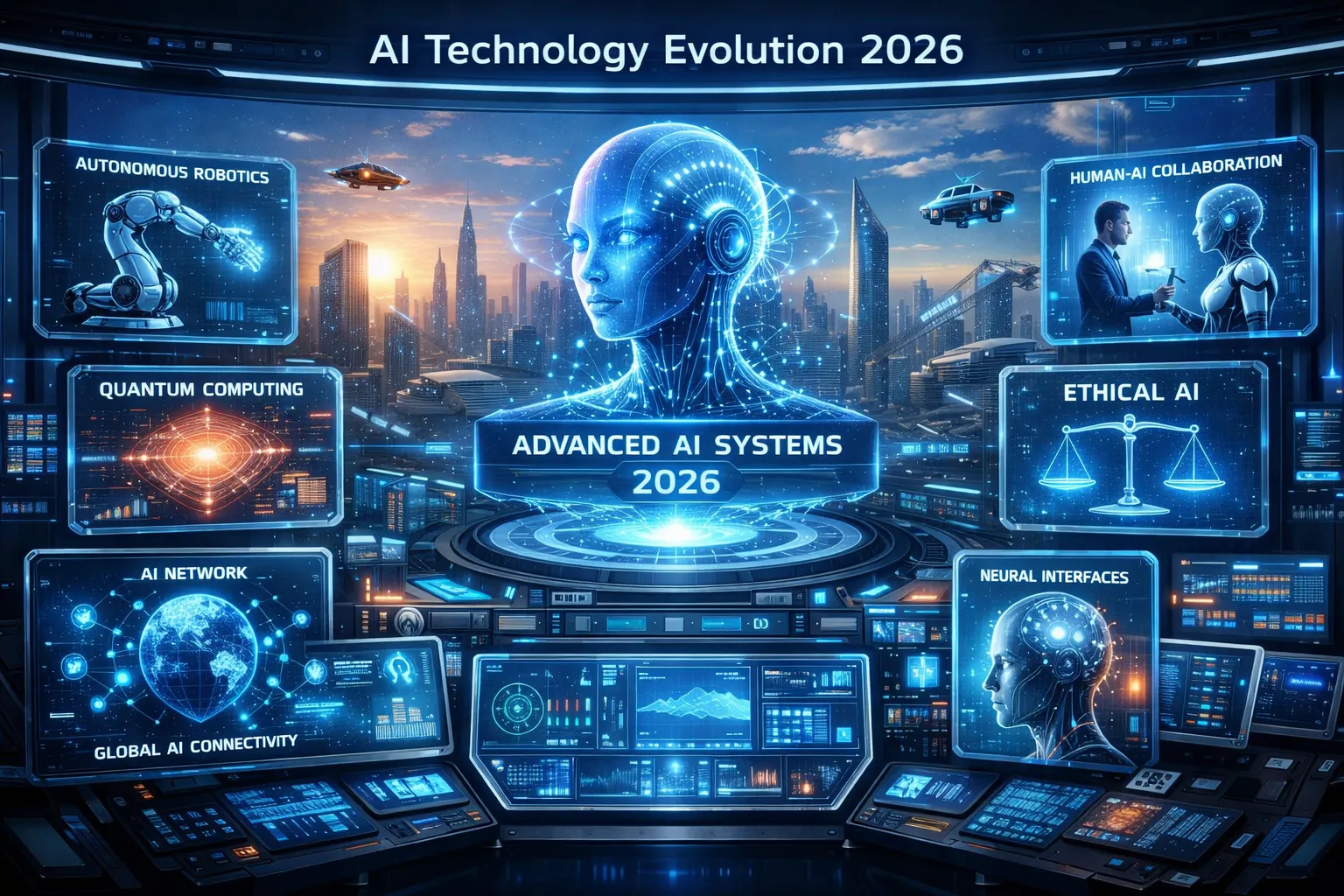
2026 marks a watershed moment in artificial intelligence. Just three years ago, ChatGPT sparked the AI revolution. Today, we're living in a world where AI doesn't just assist — it collaborates, creates, and even makes autonomous decisions.
From Indian startups to Silicon Valley giants, AI has evolved from experimental technology to mission-critical infrastructure. This comprehensive guide explores what's changed, what's working, and what's coming next.
🔥 5 Key AI Changes in 2026
GPT-5 & Advanced LLMs
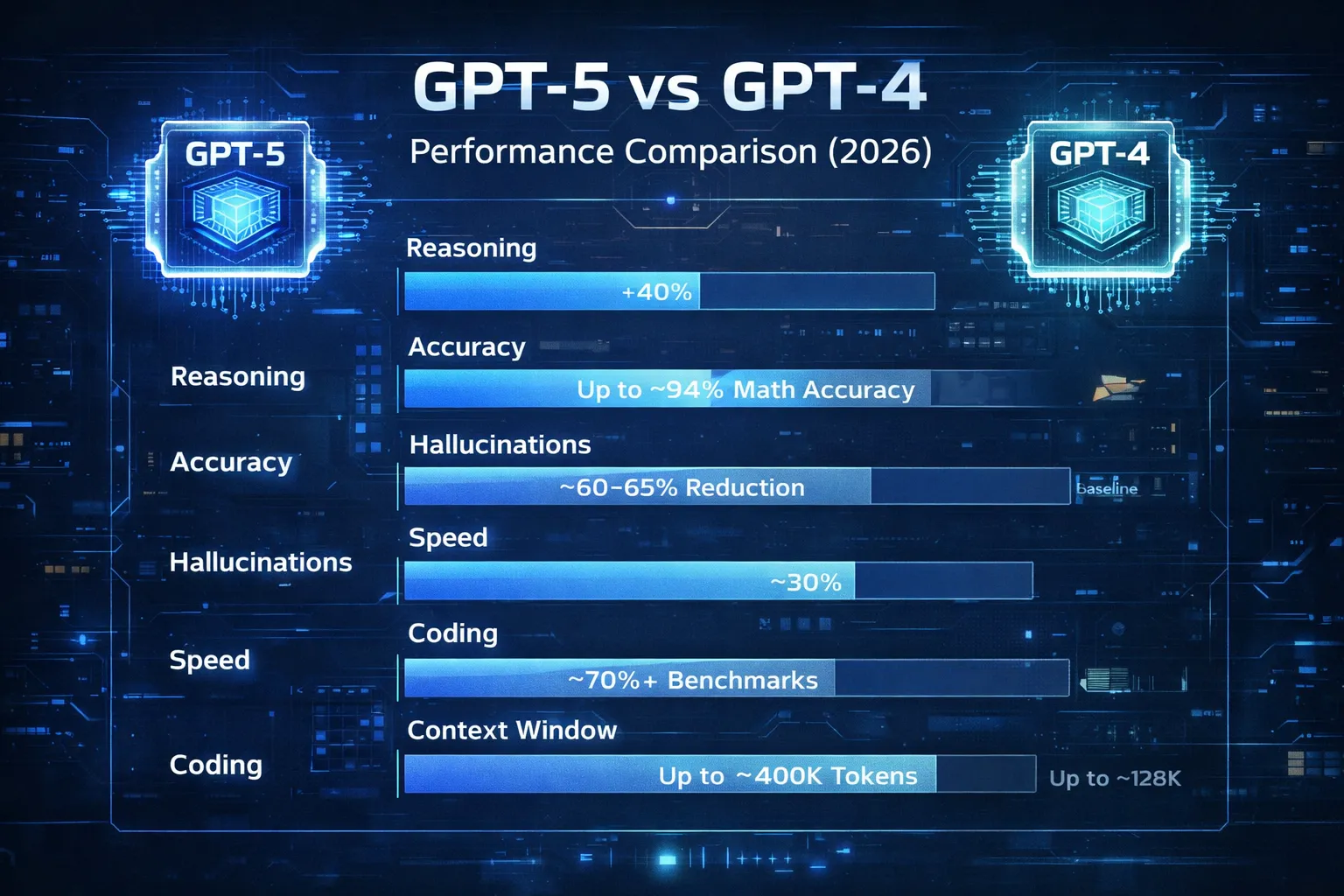
Context windows spanning millions of tokens with reasoning capabilities approaching human performance.
Autonomous AI Agents
Systems that plan, execute, and adapt without human intervention across customer service to code deployment.
Multimodal AI
Single models processing text, images, video, audio, and code — enabling entirely new use cases.
Edge AI Deployment
Powerful AI models on smartphones and IoT devices — privacy-first and lightning-fast.
AI Regulation & Ethics
Governments worldwide implementing safety standards, transparency requirements, and ethical guidelines — especially in healthcare and finance.
🧠 GPT-5 & Next-Gen Language Models
What's New:
- 10M Token Context — Process entire codebases or books in one prompt
- Native Reasoning — Solves complex math and logic without plugins
- Personalization — Learns your style, preferences, and workflow
- Real-Time Web — Instantly pulls latest information
- Voice-First — Natural conversations in 50+ languages
🤖 Rise of Autonomous AI Agents
The shift from assistive AI to agentic AI is the biggest transformation of 2026.
What Are AI Agents?
AI agents are autonomous systems that can:
- Plan — Break down complex goals into steps
- Execute — Use tools and APIs to complete tasks
- Learn — Improve from feedback and outcomes
- Adapt — Handle unexpected situations
Top Frameworks in 2026
| Framework | Best For | Rating |
|---|---|---|
| LangChain | General-purpose AI apps | ★★★★★ |
| CrewAI | Multi-agent collaboration | ★★★★★ |
| AutoGPT | Autonomous task execution | ★★★★★ |
| Semantic Kernel | Enterprise integration | ★★★★★ |
Use Case: E-Commerce Agent
- Customer asks: "Find running shoes under ₹3000"
- Agent searches inventory, filters by price
- Analyzes past purchases for style preferences
- Presents top 5 options with comparison
- Handles checkout and tracks shipment
🎨 Multimodal AI Revolution
2026's breakthrough: AI models that truly understand the world through multiple senses simultaneously.
Vision
Images, videos, docs
Audio
Speech, music, sounds
Code
Write, debug, optimize
Top Multimodal Models
- GPT-5 Vision — OpenAI's flagship multimodal model
- Gemini Ultra 2.0 — Google's answer to GPT-5
- Claude 4 Sonnet — Best for document analysis
- Llama 4 Omni — Open-source multimodal powerhouse
🏢 Enterprise AI Adoption
AI is no longer experimental — it's essential infrastructure.
Industries Leading AI Adoption in India
- AI-powered fraud detection (99.2% accuracy)
- Automated loan approvals in under 60 seconds
- Personalized investment recommendations
- Voice-based UPI payments
- AI diagnostics rivaling specialist doctors
- Drug discovery accelerated by 10x
- Personalized treatment plans
- Remote patient monitoring via AI
- AI product photography and descriptions
- Dynamic pricing optimization
- Virtual try-on with AR + AI
- Predictive inventory management
🔮 What's Coming Next
Short-Term (2026 – 2027)
- AI-Native Apps — Software built AI-first from ground up
- Personal AI Assistants — Your AI that knows everything about you
- Regulation Frameworks — Government standards & certifications
- Quantum + AI — First commercial quantum-enhanced AI systems
Long-Term (2028 – 2030)
- AGI Progress — Systems approaching human-level general intelligence
- AI-Human Collaboration — Seamless partnership in creative work
- Decentralized AI — Blockchain + AI for community-owned models
- Brain-Computer Interfaces — Direct neural AI interaction
Expert Prediction
"By 2030, the question won't be 'Do you use AI?' but 'Which AI ecosystem do you belong to?' Just like iOS vs Android today."— Dr. Priya Sharma, AI Researcher at IIT Delhi
❓ Frequently Asked Questions
🚀 Ready to Master AI in 2026?
Join our comprehensive AI & Prompt Engineering course and stay ahead.
🎯 Final Thoughts
AI in 2026 is not science fiction — it's daily reality. From Indian startups using AI agents to global enterprises deploying multimodal systems, the transformation is complete.
The winners aren't those with the biggest budgets, but those who adapt fastest, learn continuously, and experiment fearlessly.
Whether you're a developer, entrepreneur, student, or business leader — the time to embrace AI is now. Not tomorrow. Now.